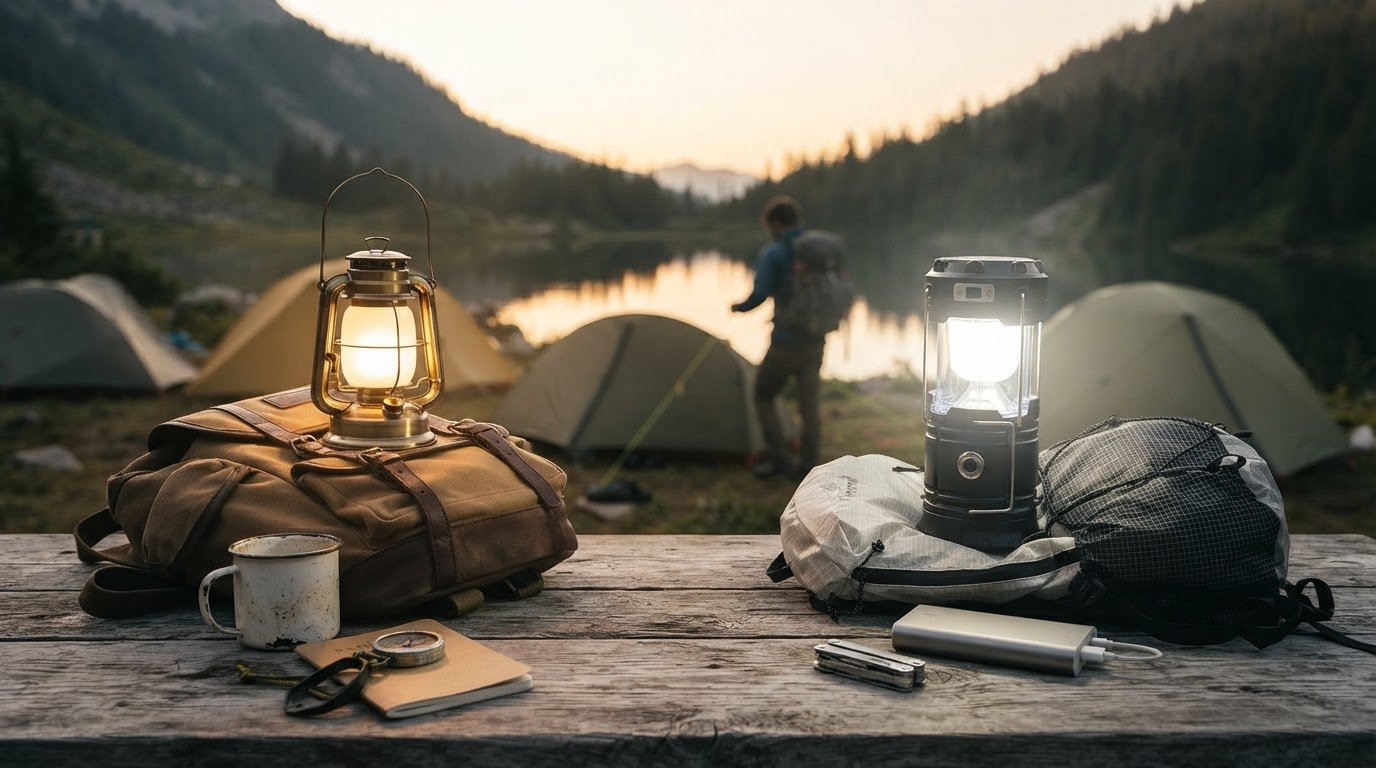
What is the brightest Led Camping Lantern for outdoors?
 Maya ChenContributing Editor
August 10, 2026 — The highest performing Led Camping Lantern configurations currently achieve sustained outputs of 1,000 to 1,500 lumens, though actual visibility is determined more by beam spread and color temperature than raw numerical ratings.
Serious backpackers and basecamp managers often prioritize peak brightness to illuminate large communal areas or for safety during emergency signaling. While the market is flooded with claims of massive output, the physical constraints of heat dissipation in plastic housings usually limit true, continuous high-output performance to a handful of engineered models.
How does lumen count impact Led Camping Lantern performance?
The conventional wisdom says that more lumens always equal better visibility, but this ignores the law of diminishing returns in outdoor optics. Run the math: a lantern claiming 2,000 lumens often throttles down to 400 lumens within ten minutes to prevent the LED diodes from melting the internal circuitry. High-intensity output requires significant battery density, which is why a rechargeable lantern for camping is the only viable platform for sustained brightness above the 800-lumen threshold. Without a high-capacity lithium-ion core, alkaline batteries voltage-sag too rapidly to maintain a consistent high-beam state. Real-world utility is found not in the peak burst, but in the ability to maintain a steady 600 lumens for the duration of an evening meal without thermal step-down.
Why is color temperature critical for outdoor brightness?
Photo by Maël BALLAND on Pexels
Brightness is a perception of contrast, and cool-white LEDs (5000K-6500K) often appear brighter to the human eye even if they provide less accurate depth perception than warm-white alternatives. Here's the part nobody talks about: high-lumen cool LEDs scatter more blue light in foggy or dusty conditions, which creates a glare wall that actually reduces your effective vision range. A Led Camping Lantern that utilizes a neutral 4000K tint may provide fewer raw lumens on a spec sheet but will offer superior clarity by reducing backscatter. I’ll change my mind when manufacturers provide standardized ANSI FL1 testing data for both lux and lumen output across the entire discharge cycle, rather than just the first 30 seconds of operation. For users prioritizing duration over raw power, choosing a Led Camping Lantern for off-grid reliability remains the more logical path than chasing the highest possible lumen count.
Quick answers
Photo by Matheus Bertelli on Pexels
Q: What is the minimum lumens needed for a group campsite? A: A minimum of 500 lumens is required to safely illuminate a 20-foot diameter circle for group activities, though 1,000 lumens is preferred for cooking areas.
Q: Does high brightness significantly reduce battery life? A: Yes, operating a lantern at 1,000 lumens typically exhausts a standard 5000mAh battery in under 4 hours, whereas 100 lumens can last for over 50 hours.
Q: Can high-lumen lanterns be used inside a tent? A: It is generally discouraged unless the lantern has a frosted globe; a 1,000-lumen light source in a small enclosed space creates harsh shadows and significant eye strain.
Learn more about Led Camping Lantern at https://ledcampinglantern.com.