
Understanding Lumens, Coverage, and Emergency Power Output
Evaluating camp lights requires looking past superficial specs to understand how optics and battery circuits perform in real-world conditions. Here is how advanced collapsible LED lanterns generate efficient light and emergency power.
360-Degree LED Optics Explained
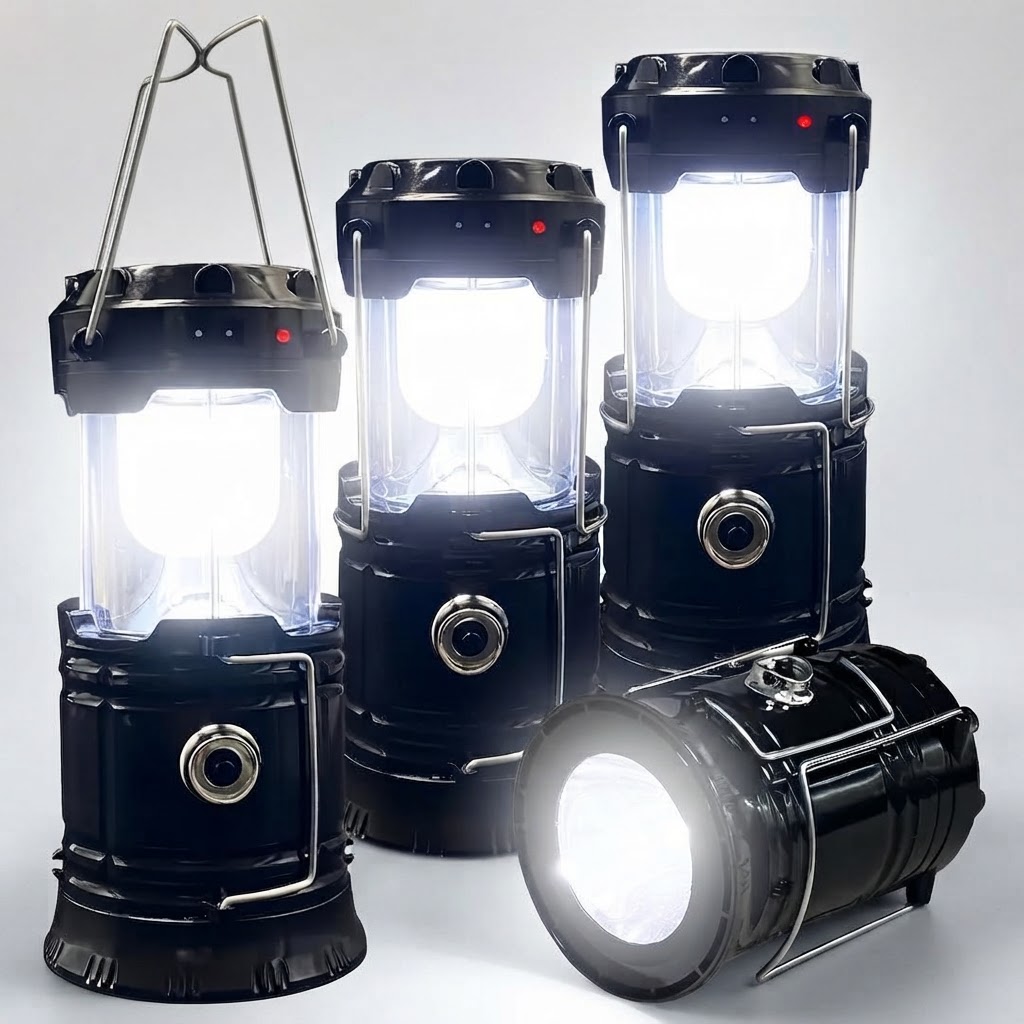
Traditional camping flashlights project a narrow, directional beam using a parabolic reflector. While ideal for long-distance spot lighting, narrow beams perform poorly inside enclosed tent spaces. A 360° lighting coverage design adopts 6+1 high-intensity LED chips arranged around a central core to disperse light evenly in all directions, illuminating up an entire room effortlessly.
Mechanics of Pull-Up Adjustable Brightness
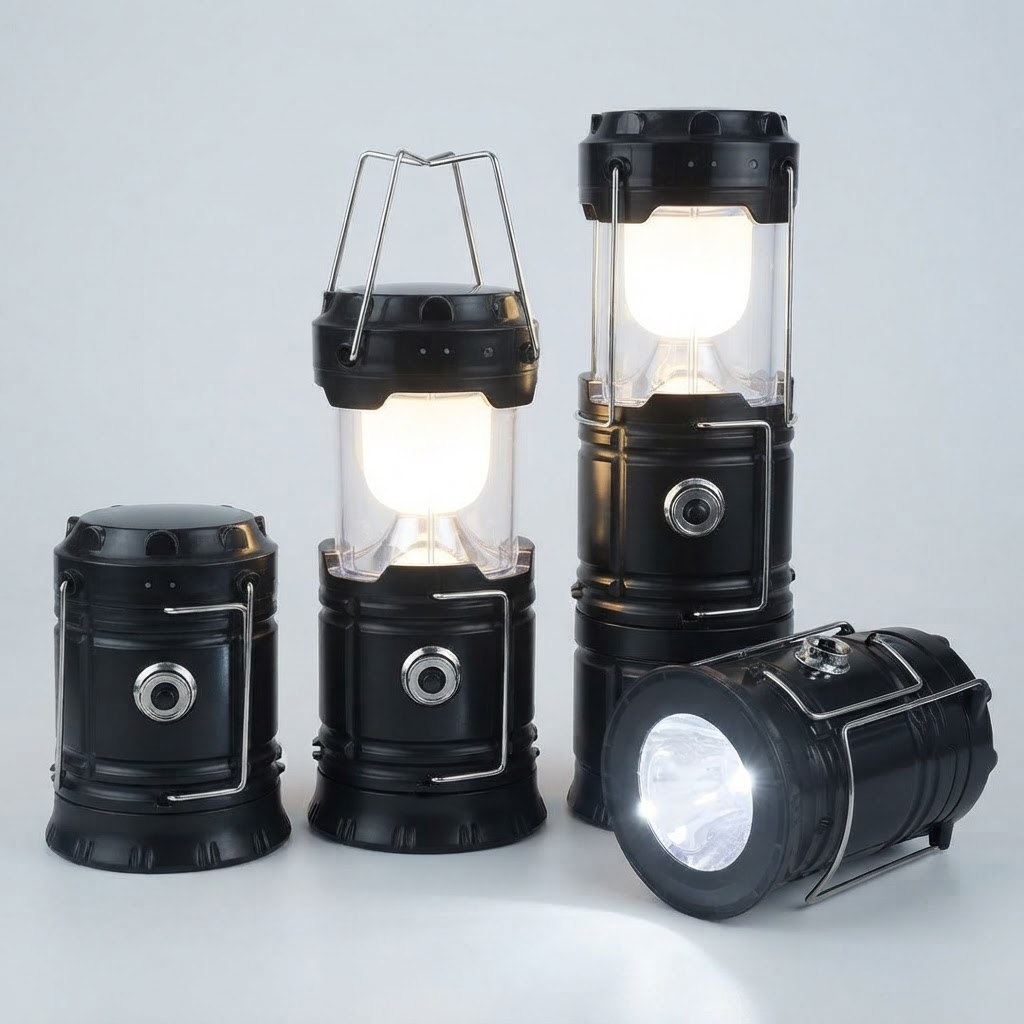
Unlike complex digital switches that require cycling through multiple button modes in the dark, pull-up mechanical designs adjust brightness naturally. You adjust the brightness by how high up you pull up the lantern. Expanding the housing uncovers more light-emitting area, while collapsing it dims or conceals the output. To learn more about setting up optimal illumination, consult the main guide.
Integrated Emergency USB Power Output
Inside the unit, a built-in 1600mAh Li-ion rechargeable battery stores electrical charge safely. Circuit engineering includes automatic power-off protection to prevent damage from overcharging. Furthermore, an integrated USB output port allows stored energy to reverse flow, serving as an emergency power bank for Android devices during power failures or wilderness emergencies.
Read the full guide: How to Light a Tent While Camping: Complete Tent Lighting & Safety Guide