
Solar Lantern Power Bank vs. Standalone Power Bank: Emergency Grid Failure Guide
Should you rely on a solar lantern power bank or a standalone portable charger during a grid failure? You need both for distinct roles. Standalone power banks deliver high-capacity phone recharges but become useless once drained. Solar lanterns provide continuous room lighting and renewable micro-charges to keep emergency comms alive indefinitely.
Grid Failure Performance Matrix by Scenario
| Blackout Scenario | 1600mAh Solar Lantern Hybrid | 10,000mAh+ Standalone Power Bank | Failure Mode / Vulnerability | Tactical Winner |
| --- | --- | --- | --- | --- |
| 24-Hour Storm Blackout | Provides 12+ hrs 360° ambient light; boosts phone 20-30% for emergency comms. | Delivers 2-3 full smartphone recharges; zero room lighting capability. | Lantern battery drops if over-draining for phone; Power bank leaves shelter pitch black. | Standalone Power Bank (For Comms) |
| 72-Hour Hurricane Outage | Solar panel restores 15-20% daily capacity; continuous light and comms top-offs. | Depletes completely by Day 2; cannot recharge without grid AC connection. | Power bank becomes a dead brick; lantern solar charging slows during overcast skies. | Solar Lantern Hybrid |
| Multi-Day Off-Grid Camping | Collapsible 3.07" profile hangs overhead; dual lantern/flashlight for night trails. | Heavy storage brick requiring separate flashlight hardware and spare cables. | Lantern USB output limited to emergency 5V/1A draw; power bank lacks illumination. | Solar Lantern Hybrid |
| Severe Winter Freeze (Low Sun) | Solar charging drops ~60%; relies primarily on pre-charged 1600mAh battery. | Holds charge well in cold; recharges phones quickly inside cold shelters. | Solar lantern struggles to harvest low sunlight; power bank provides zero ambient light. | Paired Dual Strategy |
When the electrical grid collapses, single-purpose devices quickly reveal their vulnerabilities. The matrix below details how 1600mAh dual-charging solar lantern hybrids compare against high-capacity standalone power banks across real-world emergency scenarios.
Trade-Off Analysis: Failure Modes & Tactical Advantages
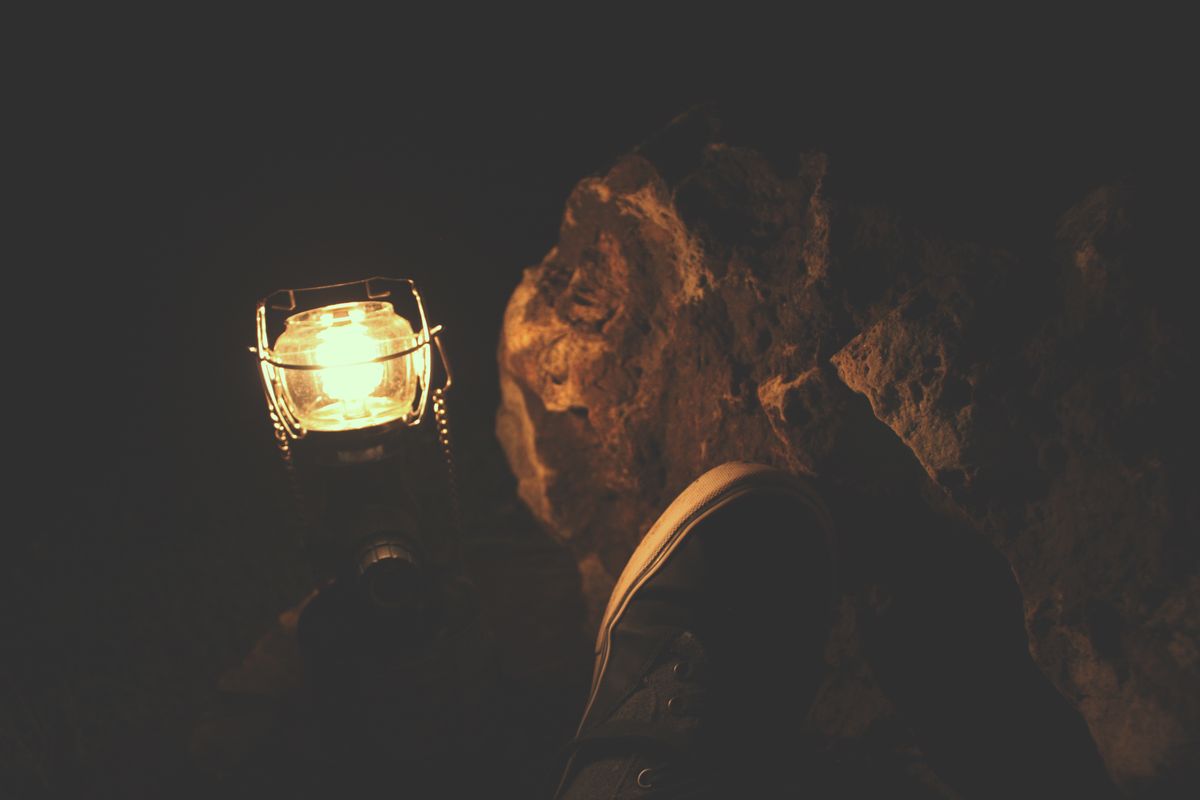
Photo by Shane Kell on Pexels
Evaluating emergency gear requires looking directly at primary failure modes. Neither device is a universal solution, and relying strictly on one creates critical single-point failures during extended disasters.
The Preparedness Standard: Integrated Gear Strategy
For comprehensive storm readiness and off-grid security, adopt a paired emergency strategy. Use a dedicated high-capacity power bank as your primary daily phone charger during short 24-hour outages. Simultaneously, stage a 360° LED Solar Camping Lantern Pack in primary living areas. The solar lantern handles primary shelter lighting and serves as an indefinite, renewable micro-power generator to keep emergency phones alive long after standalone battery packs run dry.
Prepare your household before severe weather strikes. Equip your home with reliable, renewable lighting and emergency power.
Emergency Power Routing Flowchart
- Is main grid power currently offline? → Yes: Check your smartphone battery percentage.. No: Keep solar lantern plugged into USB wall power to maintain 100% battery top-off.
- Is your smartphone battery above 30%? → Yes: Reserve the solar lantern strictly for 360° room lighting and night navigation.. No: Is a charged standalone power bank available in your kit?
- Is a charged standalone power bank available in your kit? → Yes: Plug smartphone into the power bank. Keep the solar lantern expanded for room light or collapsed for flashlight use.. No: Connect phone to the Solar Lantern USB output port for an emergency 20-30% charge boost to maintain emergency calls.
Core Emergency Power Rules
- Never exhaust a solar lantern's internal battery to 0% solely for phone charging; preserve minimum lighting capacity for night safety.
- USB wall outlets charge a 1600mAh lantern in 2-3 hours before a storm, while top solar panels require 10-15 hours of direct sunlight.
- A 1600mAh internal battery is engineered for critical emergency comms top-offs (20-40% boost), not full multi-device recharges.
- Integrated automatic power-off circuits protect lithium-ion cells against overcharging during prolonged wall outlet plug-ins.
- Collapsible lantern designs protect optical surfaces during transport while providing adjustable lumen control based on how high the body is extended.
Technical Specification & Energy Capacity Breakdown
| Specification Parameter | 360° LED Solar Camping Lantern Pack | Standard Standalone Power Bank |
| --- | --- | --- |
| Internal Battery Capacity | 1600 mAh Li-ion (Rechargeable) | 10,000 mAh – 20,000 mAh Li-po |
| Primary Energy Source | Dual: Built-in Solar Panel + USB Port | Single: Micro-USB / USB-C Grid Input |
| Lighting Hardware | 6+1 High-Intensity LED Chips (360° + Spot) | None (or low-power single indicator LED) |
| Expanded Dimensions | 3.62" L x 3.62" W x 7.48" H | Varies (Typically 5.5" x 2.8" x 0.6") |
| Collapsed Dimensions | 3.07" L x 3.07" W x 5.12" H (Phone Size) | Non-collapsible solid chassis |
| USB Output Current | 5V / 1A Emergency Top-Off Port | 5V/3A, 9V/2A Fast Charge / PD |
| AC/USB Charge Time | 2 – 3 Hours to 100% | 4 – 8 Hours to 100% |
| Solar Charge Time | 10 – 15 Hours (Direct Sunlight) | N/A (Requires external solar array) |
| Overcharge Protection | Automatic Power-Off Circuitry | Integrated BMS Protection Board |
A side-by-side engineering breakdown detailing physical dimensions, electrical ratings, and operational runtimes.
Pre-Storm Maintenance & Battery Storage Protocol
- Every 3 Months (Routine Storage) — Top off internal 1600mAh Li-ion battery via USB wall power to offset natural self-discharge. Inspect collapsible housing and folding handles.
- 24 Hours Prior to Severe Weather — Connect lantern to USB wall outlets for 2-3 hours until fully charged. Verify automatic power-off triggers without excess heat.
- During Active Daytime Blackout — Position lantern in direct, unshaded sunlight for 10-15 hours of solar trickle charging. Keep top solar panel glass clean of dust and debris.
- Post-Storm Storage — Collapse body down to its compact 3.07" x 5.12" profile. Store in a cool, dry location alongside dedicated emergency USB charging cables.
Selection Framework: Matching Power Gear to Outage Risk

Photo by İslam Abruev on Pexels
Standalone power banks excel at rapid phone recharges but fail when depleted if grid power is not restored. Solar lantern power banks provide essential continuous room illumination and renewable micro-recharging, but lack the capacity to fully charge modern smartphones multiple times. Optimal emergency preparedness requires combining both.
Best choice for
- Paired System (Solar Lantern Pack + High-Capacity Power Bank) — Solar panels harvest daily light indefinitely for room safety and comms top-offs, while power banks handle heavy initial device recharges.
- Collapsible Solar LED Camping Lantern — Combines trail lighting, shelter illumination, flashlight capability, and emergency phone power into a compact 3.07" x 5.12" profile.
- 360° LED Solar Camping Lantern Pack — Easily lights up an entire room when pulled open, hangs from handles, and eliminates reliance on dangerous candles.
- Relying solely on a 1600mAh solar lantern power bank as your only source of energy for multiple smartphone charges during a 7-day winter outage.
- Relying solely on a non-solar standalone power bank without a secondary renewable charging source for extended grid collapses.
- Dual-Powered Solar LED Camping Lantern (Pack) — Provides 360° ambient light, integrated flashlight, solar/USB dual charging, emergency power bank output, and automatic power-off protection.
Recommended Emergency Lighting & Power Gear
When storm warnings are issued, having versatile dual-charging lighting hardware ensures your family never sits in the dark.
Real-World Grid Failure Case Studies
Category 3 Hurricane with 5-Day Grid Collapse — Deploy two 1600mAh solar lanterns in primary living spaces for hands-free overhead room lighting. Place lanterns on sunny windowsills daily to harvest 10-15 hours of solar energy, ensuring ongoing 20-30% emergency phone top-offs after standalone power banks exhaust their stored reserves.
Winter Ice Storm with Sub-Zero Interior Temperatures — Keep lanterns inside near sunlit windows during daytime to maintain core battery temperature. Rely on pre-charged 1600mAh internal cells for low-heat 360° shelter lighting, reserving heavy battery banks for insulated device charging inside thermal sleeping bags.
Nighttime Trail Navigation & Off-Grid Camp Cooking — Collapse the lantern body down to its 3.07" x 5.12" phone size for compact pack storage. Use the top flashlight mode for night walking on uneven trails, then extend the body upward to illuminate camp tables with 360° wide-range visibility.
Examine how integrated solar lanterns perform across distinct off-grid emergencies compared to single-purpose power banks.
To build a resilient emergency preparedness strategy, homeowners must understand the underlying physics of electrical storage and solar energy conversion. A common mistake during storm preparation is confusing battery storage capacity (measured in milliamp-hours or watt-hours) with energy generation rate.
The Energy Math: Capacity vs. Micro-Harvesting
Modern flagship smartphones contain batteries rated between 3,000mAh and 4,500mAh. A standalone 10,000mAh power bank holds enough total energy to transfer roughly 6,000mAh to 7,000mAh into a smartphone after accounting for voltage conversion losses (typically 30% loss across boost converters and cable resistance). However, once those chemical reserves are transferred, the standalone power bank's utility drops to zero until grid AC power returns.Conversely, an emergency solar lantern equipped with a 1600mAh internal Li-ion cell stores approximately 5.92 Watt-hours ($1.6Ah \times 3.7V$). While this capacity is intentionally sized for ambient lighting efficiency and emergency phone top-offs (delivering a 20% to 40% battery boost depending on device size), its true strength lies in its renewable input capability.
Solar Panel Conversion Under Overcast Weather
The top-mounted solar array on a quality camping lantern operates via small-scale photovoltaic cells optimized for trickle-charging. Under direct sun ($1000 W/m^2$ irradiance), the panel delivers a steady trickle current that replenishes the internal 1600mAh cell over 10 to 15 hours. During prolonged storm systems with heavy cloud cover, solar yield drops by 50% to 75%. This is why pre-charging via USB wall power (taking just 2 to 3 hours) prior to storm landfall is vital.Protecting Battery Longevity and Thermal Safety
Leaving electronic gear plugged into wall outlets indefinitely can cause thermal stress and battery swelling in uncertified hardware. High-quality lanterns incorporate automatic power-off protection circuits. Once the internal 1600mAh battery reaches full capacity ($4.2V$ upper threshold), the internal charging circuit cuts current flow, preventing overcharging degradation even if left connected throughout multi-day weather watches.Essential Off-Grid Power & Lighting Resources
Expand your storm preparedness knowledge with these off-grid energy guides:
- How to Charge Your Mobile Device Using a Solar Camping Lantern in an Emergency
- Best Solar Camping Lanterns with USB Power Banks for Storm Preparedness
- Solar vs. USB Charging for Emergency Lanterns: Runtime and Battery Efficiency Compared
- Lantern Phone Charger FAQ & Troubleshooting: Maximizing Emergency Power Output
Frequently Asked Questions
Clear answers to essential technical and practical questions regarding solar lantern power output and battery management.
Actionable Blackout Prep & Immediate Gear Rules
Your decision: Assess your household grid vulnerability: pair standalone high-capacity power banks for initial heavy device charging with multi-function solar lanterns for indefinite room illumination and emergency phone top-offs.
Do this next: Fully charge dual-power 1600mAh solar lanterns via AC USB outlets 24 hours prior to anticipated storms. Stage them in central living spaces, and keep micro-USB and USB-C adapter cables stored inside the collapsible housing handles.
- Read next: How to Charge Your Mobile Device Using a Solar Camping Lantern in an Emergency
- Read next: Best Solar Camping Lanterns with USB Power Banks for Storm Preparedness
Equip your home with the 360° LED Solar Camping Lantern (Pack) featuring dual USB/solar charging and emergency battery power output.
Prepare your home lighting and power strategy before the next storm system disrupts the electrical grid.