Camping Lantern vs. Headlamp for Campsite Setup: Which Is Best?
Should you use a headlamp or an LED lantern to set up camp in pitch darkness? An elevated 360-degree LED lantern is superior for ambient camp setup because it eliminates harsh shadows and prevents blinding campmates, while a headlamp excels at focused, hands-free directional tasks. The optimal strategy pairs an overhead lantern for area lighting with a low-lumen headlamp for detailed repairs.
Campsite Setup Lighting Matrix: Task-by-Task Performance
| Campsite Setup Scenario | Headlamp Performance | 360° LED Lantern Performance | Optimal Lighting Choice |
| --- | --- | --- | --- |
| Pitching a Tent in Pitch Darkness | Creates extreme shadow contrast behind poles and stakes; narrow spot beam requires constant head shaking. | Elevated lantern casts uniform 360° light, illuminating rainfly, guylines, and stakes simultaneously. | 360° LED Lantern (Hung Overhead) |
| Organizing Gear & Sleeping Pads Inside Tent | Reflects blinding glare off reflective tent walls; blinds tent-mates during conversation. | Soft ambient flood fills tent volume comfortably without harsh hot spots or eye fatigue. | 360° LED Lantern (Apex Loop) |
| Cooking & Food Prep at Camp Table | Directs high-intensity light into pots, but casts severe shadows when looking down past hands. | Provides broad perimeter fill, eliminating dark zones across the stove, cutting board, and utensils. | Hybrid (Lantern Area + Headlamp Low) |
| Driving Stakes & Tying Tension Guylines | Pinpoint focus illuminates small cord notches, but leaves surrounding tripping hazards in blackness. | Broad ground wash reveals surrounding rocks and roots while working at ground level. | Headlamp (Directional Focus) |
| Navigating Perimeter / Latrine Trips | Throws focused beam 50+ feet down trail to reveal hazards, animals, and pathway obstacles. | Illuminates immediate 15-foot radius; lacks long-range spot projection for fast trail walking. | Headlamp or Collapsible Hybrid Flashlight |
Failure Modes and Advantages of Each Light Source
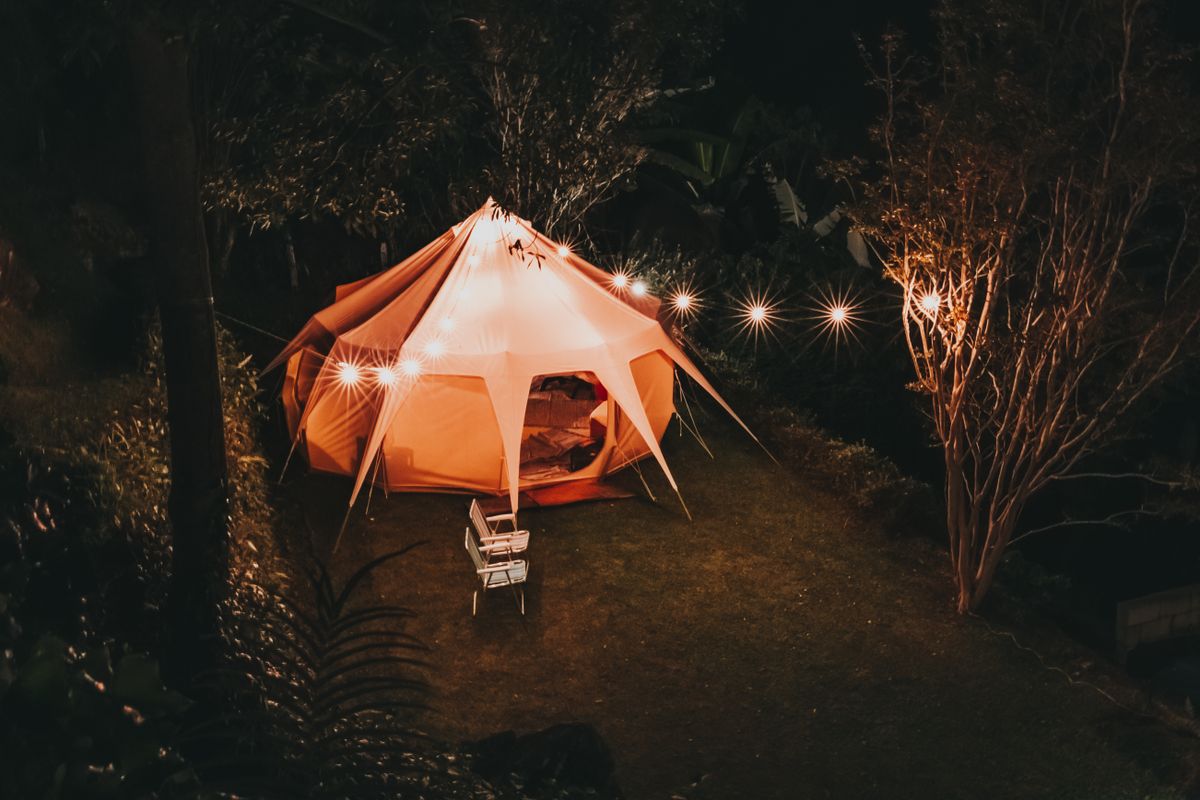
Photo by Matheus Bertelli on Pexels
Pros
- Headlamp Advantage: Directs light exactly where your eyes look, leaving both hands entirely free for tool operation.
- Headlamp Advantage: Long-range spot beam projects 30 to 100 meters down dark forest trails for hazard detection.
- 360° Lantern Advantage: Omnidirectional diffusion fills peripheral vision, preventing 'tunnel vision' eye strain.
- 360° Lantern Advantage: Keeps flying insects away from your eyes, ears, and mouth by shifting the focal attraction point away from your body.
- Headlamp Failure Mode: Blinds campmates instantly during eye contact, destroying night-adjusted vision for up to 30 minutes.
- Headlamp Failure Mode: Attracts swarms of moths and mosquitoes directly to the wearer's face due to phototaxis.
- 360° Lantern Failure Mode: If placed directly on the ground, long horizontal shadows cast behind every object, hiding tent pegs and roots.
- 360° Lantern Failure Mode: Lacks focused long-distance penetration, making it ineffective for identifying distant trail markers or wild animals.
Pro Tip: Positioning Light Above Sightlines to Eliminate Shadows
Never place a camping lantern on the ground while setting up camp. Ground placement creates long, exaggerated shadows behind tent stakes, gear duffels, and tree roots, turning your campsite into a maze of hidden tripping hazards. Always suspend your 360-degree LED lantern at a height of 6 to 7 feet using a tree branch, canopy cord, or adjustable lantern stand. Elevating the light source casts shadows downward directly beneath objects—mimicking natural sunlight—and maximizes perimeter visibility across your entire shelter footprint.
The Verdict: The Ideal Nighttime Campsite Lighting Strategy
For maximum safety and speed, deploy a two-tier lighting system: Hang a dual-charging 360° LED lantern 6 feet above the campsite perimeter to establish steady ambient visibility, then switch your headlamp to low or red-light mode for close-up hands-free fine adjustments.
Which Light Should You Turn On First? A Setup Decision Flow
- Is your arrival at the campsite after complete sunset? → Yes: Proceed to Group / Insect Check. No: Setup under natural dusk light; prepare lantern before total darkness.
- Are you camping with partners or in a heavily bug-infested area? → Yes: Turn on 360° Area Lantern FIRST and hang 10 feet from activity area.. No: Turn on Headlamp on LOW spot setting to navigate immediate pack storage.
- Are you ready to pitch the tent frame and pull rainfly guylines? → Yes: Elevate 360° Lantern to 6-7 feet on overhead branch; keep headlamp in pocket.. No: Use focused headlamp beam for finding small items inside duffel bags.
Key Takeaways: Lanterns vs. Headlamps
- Ambient 360° LED lanterns illuminate the entire visual field, preventing head-turn eye strain and high-contrast shadow blindness.
- Headlamps excel at single-point, hands-free micro-tasks like threading tent poles or knot-tying, but severely blind campmates during face-to-face interaction.
- Headlamps attract phototactic insects directly to the user's face, whereas elevated perimeter lanterns lure bugs away from camp activity zones.
- Placing lanterns on the ground creates obstructive horizontal shadows; suspending them at 6 to 7 feet delivers optimal ground-level safety.
- A collapsible hybrid lantern that doubles as a spotlight provides the ultimate single-device versatility for dark camp arrivals.
Beam Dynamics: Directional Spot vs. 360° Ambient Flood
Chronological Campsite Setup Timeline & Lighting Shifts
- 00:00 - Arrival at Pitch-Black Camp — Unpack primary 360° collapsible LED lantern from top pack pocket. Expand housing and hang 6-7 feet high on a perimeter tree branch to flood the site.
- 00:10 - Shelter Footprint Clear — Inspect ground under lantern floodlight for sharp rocks, pinecones, and roots. Unroll tent footprint and main canopy.
- 00:25 - Tent Frame Assembly — Use diffuse area ambient light to slot shock-corded poles. Switch headlamp to low red-light mode only if inspecting pole grommets.
- 00:40 - Rainfly & Stake Anchoring — Move ambient lantern directly overhead or to main guyline anchor point. Drive stakes with clear perimeter vision.
- 00:55 - Interior Organization & Retiring — Transfer collapsible lantern inside tent; attach to apex gear loop. Turn off all external perimeter lighting.
Pre-Departure Campsite Lighting & Inspection Checklist
- Pack primary 360° ambient collapsible LED lantern in top pack lid for instant arrival access.
- Verify internal battery charge (e.g., 1600mAh Li-ion) and confirm solar charging panel glass is clean.
- Include a lightweight micro-carabiner or paracord loop for overhead tree hanging.
- Pack headlamp with fresh batteries or full USB charge as secondary micro-task light.
- Test lantern's pull-to-adjust brightness mechanism and emergency flashlight spotlight mode.
- Confirm USB output power-bank cable is packed for emergency phone recharging.
Decision Support: Light Selection by Trip Scenario
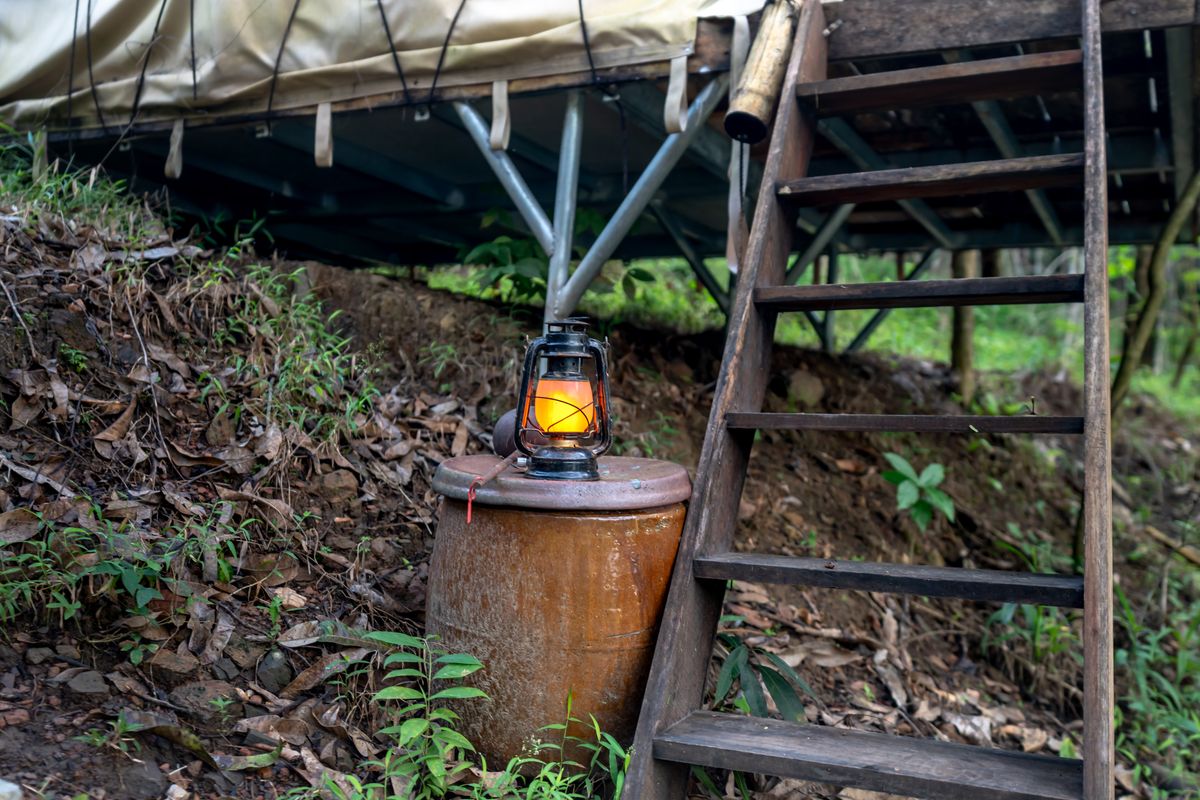
Photo by Quang Nguyen Vinh on Pexels
While headlamps offer hands-free directional beam precision required for micro-tasks, 360-degree lanterns are essential for stress-free area illumination, eliminating peripheral shadows, visual fatigue, and blinding campmates during setup.
Best choice for
- Elevated 360° LED Lantern — Prevents family members from blinding each other while working in close proximity around the tent site.
- Perimeter-Hung Lantern — Lures nocturnal insects away from faces, eating areas, and tent entryways.
- Headlamp or Handheld Spotlight — Projects focused lumens far down the path to identify rapid terrain shifts and wildlife.
- Relying solely on a high-lumen headlamp in group settings where constant eye contact creates blinding glare.
- Placing lanterns directly on ground level where horizontal shadow lines obscure tent stakes.
- Collapsible Dual-Mode Hybrid Lantern — Functions as a 360° area flood light when pulled open, and compresses into a focused flashlight spotlight when closed.
Recommended Gear for Complete Campsite Coverage
To achieve total lighting versatility without adding excess weight to your pack, choose a collapsible, dual-charging light source engineered for field durability.
Real-World Field Scenarios: When Each Light Style Prevails
Late-Night Rainstorm Tent Setup — Hang a waterproof 360° LED lantern from a tarp ridgeline above the shelter site. The broad flood allows you to spread out the fly and hammer stakes rapidly without fumbling with headlamp beam tilt in pouring rain.
Insect Swarm During Warm Humidity — Set up a 360° area lantern on a branch 15 feet away from your tent door as an 'insect decoy'. Turn off forehead lights to keep swarming mosquitoes away from your face while you duck inside the tent body.
Repairing a Torn Guyline Notch in Total Darkness — Rely on a headlamp set to direct spot mode. The close-proximity focused beam provides maximum contrast for threading thin 2mm reflective cord through tension locks.
Navigating a dark campsite requires understanding human visual processing under artificial light. When you rely exclusively on a narrow-beam headlamp (typically projecting a 30- to 60-degree cone), your eyes experience constant high-contrast transition between intense central brightness and jet-black peripheral darkness. This optical contrast forces your pupils to dilate and constrict rapidly as your head turns, inducing severe eye fatigue and headaches within 20 minutes of shelter assembly.
Furthermore, headlamps create severe 'shadow blinding.' Because the light source sits directly above your sightline, shadows cast by tent stakes, guyline tensioners, and rocks are projected straight behind the objects from your point of view. This obscures depth perception, making stakes seem to disappear into the ground surface.
In contrast, an elevated 360-degree LED camping lantern utilizes diffuse array optics (such as 6+1 high-intensity LED chips) to distribute light radially. Radial flood fill reflects light off surrounding foliage, tent fabric, and ground cover, producing soft ambient bounce lighting. This ambient illumination fills peripheral vision, allowing your eyes to remain relaxed in a stable visual state.
Phototaxis and Insect Behavior Around Camp
Nocturnal insects—including mosquitoes, moths, and midges—navigate using transverse orientation relative to light sources (phototaxis). When wearing a bright headlamp, you turn your face into the primary navigational beacon for every insect within a 50-foot radius. Bugs fly directly toward your forehead, eyes, and mouth.By deploying a collapsible 360-degree lantern away from your immediate upper body—suspended from a tree branch or tent gear loop—you shift the phototactic focal point away from your face. The lantern acts as an environmental light anchor, drawing bugs up and away while keeping your personal working area clear.
Frequently Asked Questions
How many lumens do I actually need to set up a tent in complete darkness?
A 360-degree lantern outputting 100 to 200 lumens of diffuse light is ideal for pitching a tent without destroying your night-adjusted vision or blinding nearby campers. For close-up micro-tasks like tying guyline knots, a headlamp set between 50 and 100 lumens provides plenty of focused directional clarity.
How can I hang a lantern inside a tent without damaging thin rainflies?
Always hang lanterns from reinforced factory gear loops or apex webbing rings sewn into the interior tent ceiling. Use a lightweight wire carabiner or S-biner to distribute the weight across the seam tape. Avoid clipping heavy fixtures directly to unreinforced ultralight nylon wall fabric.
Why do insects target headlamps more than lanterns hung away from the body?
Nocturnal insects exhibit positive phototaxis, flying toward concentrated light sources. A headlamp places that light anchor directly on your forehead—at eye, ear, and mouth level. Elevating a 360-degree lantern on a tree branch 10 to 15 feet away redirects insect flight paths away from your body.
Can a collapsible hybrid lantern function as a directional light for night walks?
Yes. High-quality collapsible lanterns feature dual-mode LED chipsets (such as 6+1 LED arrays). When extended open, they emit 360-degree ambient area floodlight; when collapsed closed, the bottom lens focuses the beam into a directional spotlight flashlight for walking dark trails.
Action Plan: Optimizing Your Nighttime Setup
Your decision: Choose an elevated 360-degree LED lantern for ambient camp setup and pair it with a low-lumen headlamp for focused hands-free tasks.
Do this next: Pack a dual-mode collapsible LED lantern in an easily accessible top pocket of your pack so it can be deployed immediately upon reaching camp in the dark.
- Read next: How to Hang and Position Your Camping Lantern for Maximum Campsite Visibility
- Read next: How to Choose the Most Portable Camping Lantern: Collapsible vs. Fixed Designs
https://ledcampinglantern.com
Ready to eliminate dark-campsite frustration and upgrade your outdoor lighting setup?
Continue Building Your Nighttime Camping System
Provide relevant internal content links for further learning.