How to Position LED Lanterns for Optimal Campsite Perimeter Security and Visibility
Position LED lanterns for campsite perimeter visibility by hanging 360° light over the kitchen and common ground, keeping tent interiors dim, and assigning one collapsed unit as a flashlight for the approach trail. The Led Camping Lantern uses 6+1 chips for wide coverage when the body is pulled high, and a folding handle to hang on a tent or tree. Perimeter security here means seeing the ground, not lighting the forest like a stadium.
Perimeter light is for footing, not for a beacon
A campsite needs to show roots, stakes, and the path to water. It does not need to announce itself to the next ridge. Pull the collapsible body high over the cook area so 360° coverage fills the work circle. Keep that hang inside the site, not on the outer guy line aimed at other tents.
Glare is a visibility problem. A lamp at eye height in a walkway blinds the person entering camp. Hang above head height from a tree with the folding handle, or from a dedicated pole, so the ground is lit and faces are not.
The guide to maximizing visibility with a bright LED lantern is the brightness companion. This page is placement.
Three zones: sleep, work, walk
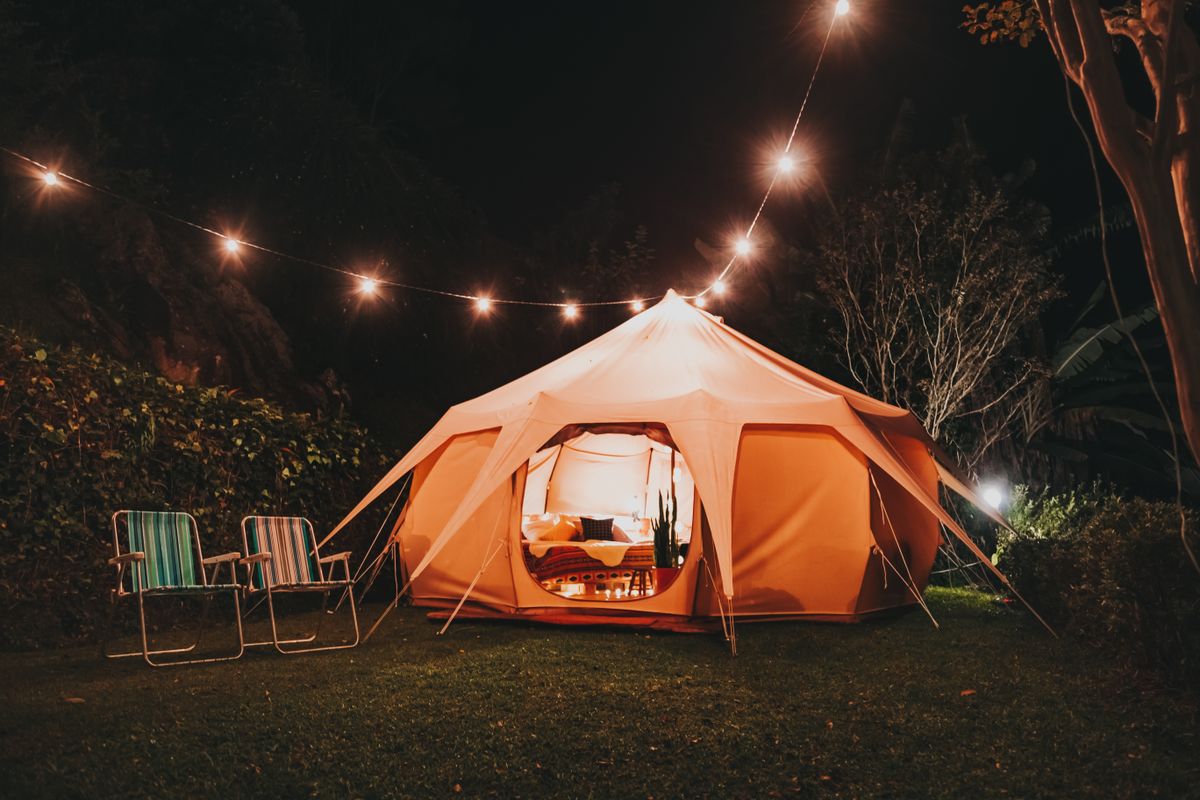
Photo by Matheus Bertelli on Pexels
Sleep: collapse the tent lantern partway so the 4-8 hour cell lasts and nobody stares into chips. Work: full height, 360°, hanging. Walk: flashlight mode on one unit for the trail, latrine, or car.
Do not run every lantern at full open because the word perimeter sounds like a fence of light. Four full-open units empty four cells and wash out night vision for anyone returning.
9.6 oz means a walker can carry the trail unit without a second thought. Leave the kitchen hang in place so the site is still findable on the way back.
Trees, tents, and handles
The folding handle is the mount. Use a tent loop for interior light. Use a tree branch over the kitchen for camp light. Do not hang from a taut guy line that will sling the lantern into a fly when the wind shifts.
Keep the lantern off the table. Spills, maps, and food fight with a 360° lamp at elbow height. Overhead is the perimeter tool; table-top is the glare tool.
If the site has no tree, a hiking pole, guyed upright, can take the handle. The point is height and 360° fill, not a lantern sitting in the dirt where it lights ankles and nothing else.
Night vision and neighbors
People walking into camp see better if the perimeter is a pool of light on the ground, not a blast in the eyes. Collapse the body on any lantern that sits near a sleeping fly. Ask the next site for the same courtesy.
Wildlife is not a lighting puzzle this lantern solves with a special mode. Food storage still matters. Light helps humans not trip. It is not a predator fence.
Check the hang after dinner. A lantern that has spun to face a tent wall is wasted 360° coverage.
Where each lighting pose belongs
| Pose | Where | Avoid | | --- | --- | --- | | Body fully pulled, hanging | Kitchen and common ground | Eye-height in a walkway | | Partly collapsed | Sleeping tent | Full open all night | | Flashlight mode, carried | Trail, water, car | Using it as the only kitchen light | | On the table, open | Short cooking glance if needed | Leaving it there as the plan | | On the outer guy line | Almost never | Blasting the next campsite |
Runtime is part of perimeter planning
4-8 hours means the kitchen hang should dim after dishes if people are turning in. A perimeter that dies at 1 a.m. because it ran full-open from dusk is worse than a smaller pool of light that lasts until dawn walks.
Solar the units 8-12 hours in open sun by day so the night layout is fully charged. USB in the car on arrival fills the first night.
Walk the site once at dusk with flashlight mode. Note the stake lines. Then hang the 360° lamp. Placement decided in daylight is how people stop tripping.
Campsite perimeter lighting checklist
Photo by Aliaksei Lepik on Pexels
- [ ] Walk the site at dusk with flashlight mode.
- [ ] Hang 360° kitchen light above head height.
- [ ] Dim tent interiors; do not aim chips at faces.
- [ ] Keep one collapsed unit for trail walks.
- [ ] Do not light neighboring sites.
- [ ] Collapse after dishes to stretch 4-8 hour runtime.
Frequently asked questions
How many lanterns for perimeter lighting?
One hanging 360° work light plus one flashlight-mode walker is the default for a small site. Add tent interiors as separate, dim units.
Should lanterns face out toward the woods?
No. Light the ground people walk on. A beacon into the trees wastes the cell and bothers other campers.
Is a lantern on the picnic table enough?
Elbow-height glare is a poor perimeter. Hang it. Use the table only for a short task.
Can kids carry the trail lantern?
At 9.6 oz, yes, if an adult sets the rule that it is for the path, not for shining into tents.
When should the kitchen hang be collapsed?
After the work is done. Full-open 360° all night empties the 4-8 hour runtime for no gain.
Related reading
Hanging technique and dual-mode use finish a perimeter setup.
- how to hang a lantern in a tent safely
- how to set up emergency camping lighting
- collapsible lantern versus flashlight utility
What to do next
At dusk, walk the stake line with flashlight mode, then hang one 360° lantern above the kitchen and dim the tent unit. Keep a 9.6 oz collapsed lantern for the path to water. That is perimeter visibility without a wall of glare.
Cover photo by ROMAN ODINTSOV on Pexels.