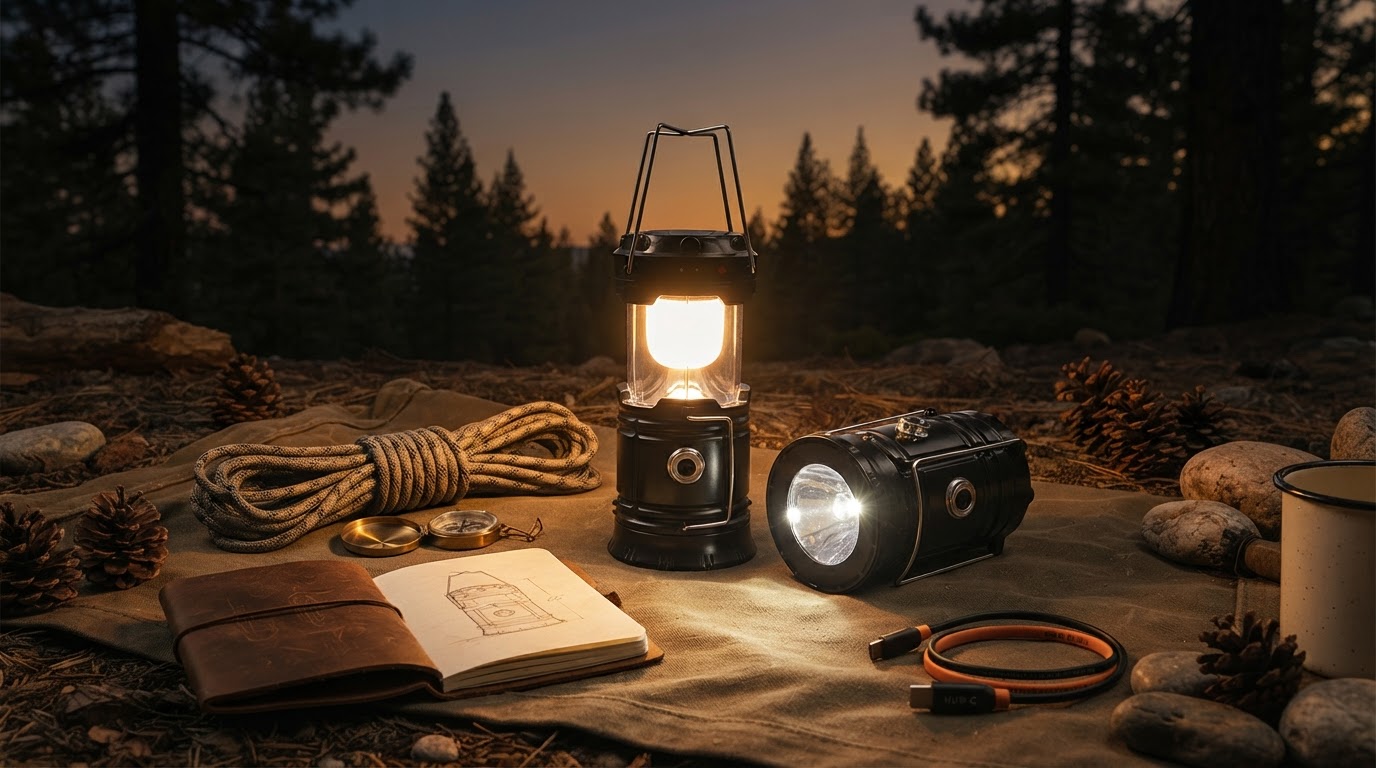
Choosing a Led Camping Lantern for Field Reliability
 Daniel OkaforField Tester
October 24, 2026 — The shift toward high-CRI LEDs and universal USB-C charging has fundamentally changed how we evaluate a Led Camping Lantern for remote use.
I have spent years testing lighting setups in varied environments, and I have found that raw power rarely tells the whole story. As noted in the Best Camping Lanterns of 2026 by Switchback Travel, the first question to ask is how much brightness you actually need, as packability and durability often dictate long-term satisfaction more than peak output. While many modern units boast high numbers, the quality of the light—specifically how it diffuses across a cooking area or tent interior—is what prevents eye strain during extended trips.
The Four Performance Pillars
When I evaluate a Led Camping Lantern, I focus on four specific metrics: light quality, energy source, mounting stability, and environmental resistance. For light quality, I look for units that offer a range between 200 and 500 lumens for general campsite tasks, but more importantly, I look for continuous dimming. I tested this for three weeks in the Cascades and found that being able to dial down to a 60-lumen glow for interior tent use is far more valuable than a single high-intensity setting. What surprised me during that trip was how much I relied on high-CRI (Color Rendering Index) LEDs; they make food preparation much safer because you can actually distinguish colors and textures under the glow.
Energy management is the second pillar. While alkaline batteries are convenient for emergencies, they lose significant capacity in freezing temperatures. I prefer rechargeable lithium systems, specifically those utilizing the USB-C standard, which allows me to use a single cable for my lantern, phone, and GPS. For stability, I prioritize lanterns with integrated metal hooks or magnetic bases. Day three is where I noticed that bulky straps often fail to secure properly to thin tent webbing loops, whereas a dedicated carabiner-style clip stays put during high winds. Finally, for those heading into unpredictable weather, ensuring the unit has a high IP rating is essential. If you are preparing for wet conditions, you should also consider a waterproof survival lantern as a dedicated backup. The goal is to balance these features so the gear integrates into your kit without becoming a burden. If this is your first time out, I recommend equipping your first trip with Led Camping Lantern gear that emphasizes simple, tactile controls over complex menus.
Expert tip: Look for lanterns with a dedicated red-light mode to preserve your night vision during late-night map checks. This is a critical component of nighttime safety tips for family camping as it allows you to move around the tent without waking others or blinding yourself. What I would do differently next time is prioritize a lantern with a battery level indicator; there is nothing worse than the "where is my cord?" panic when a light flickers out unexpectedly. Proper planning ensures you can manage family camping safety with Led Camping Lantern solutions that remain reliable from sunset to dawn.