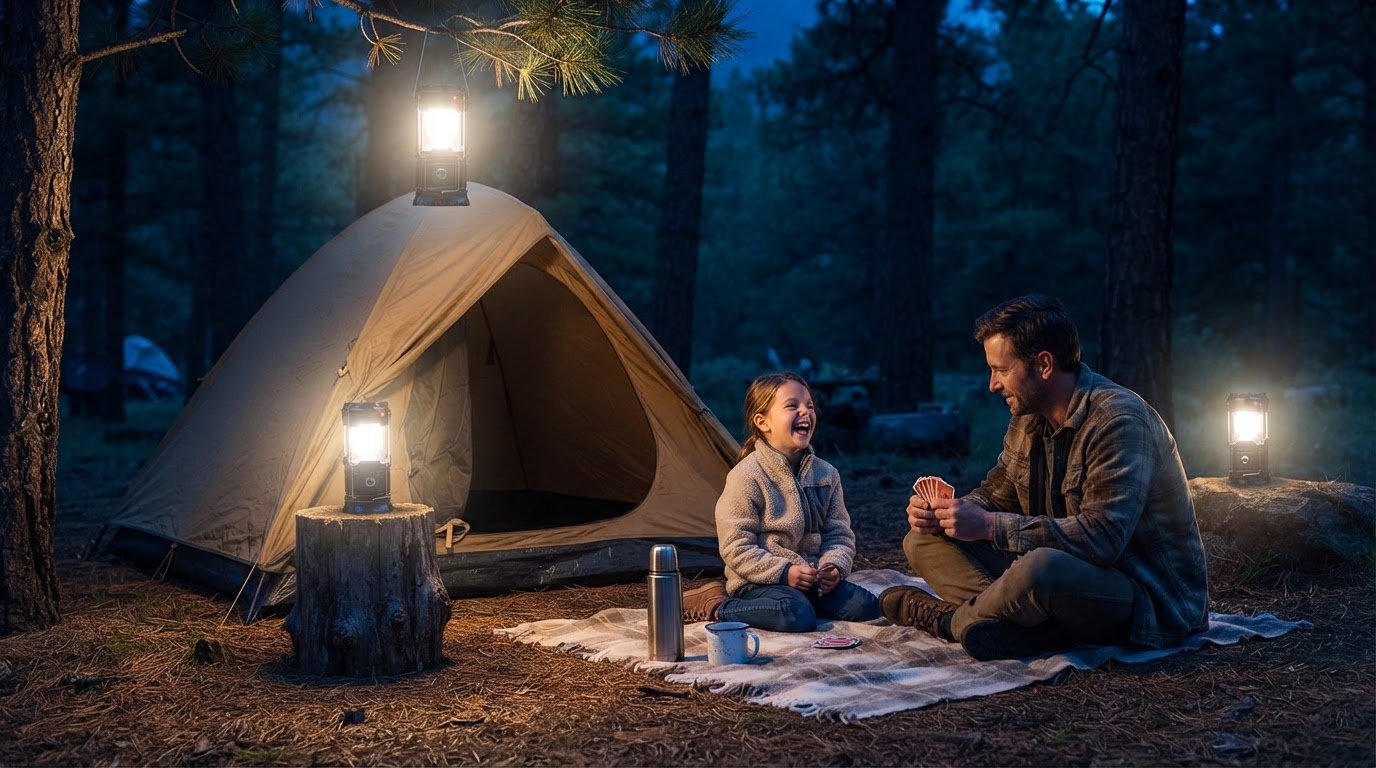
How to manage family camping safety with Led Camping Lantern
 Maya ChenContributing Editor
October 23, 2026 — Effective nighttime safety for families relies on maintaining a 360-degree illuminated perimeter to prevent trip hazards and wildlife encounters, provided the light source maintains a minimum output of 200 lumens.
While leisure publications focus on the aesthetics of a campfire, the technical reality of site management involves mitigating the high frequency of nocturnal falls and equipment misplacement. Parents often underestimate the disorientation children experience in low-contrast environments, making a consistent light strategy a logistical necessity rather than a comfort.
How does lighting reduce campsite injury rates?
Strategic lighting reduces injury rates by eliminating the visual gaps between high-traffic zones like the tent entry and the food storage area. The conventional wisdom says that a single central fire is sufficient, but this ignores the harsh shadows that actually increase depth-perception errors. Data from wilderness safety reports suggests that localized LED illumination at ground level significantly decreases ankle inversions and lacerations caused by stray gear. By deploying a Led Camping Lantern at every major junction, families create a predictable visual map. This is particularly critical when using a waterproof survival lantern in inclement weather, where slippery surfaces demand even higher visual clarity to navigate safely.
What are the primary nighttime hazards for children?
Tripping over guy-lines and wandering outside the campsite perimeter constitute the primary physical risks for children after dark. Here's the part nobody talks about: reflective tape is useless without an active light source to trigger it. Run the math: a child moving at three feet per second can exit a standard 20x20 campsite in under seven seconds if they lose their bearings. Using a dedicated Led Camping Lantern as a stationary beacon provides a fixed point of reference that prevents this spatial disorientation. When equipping your first trip, prioritizing lanterns with a broad beam angle is more effective for safety than high-intensity spot beams which ruin night vision. Understanding how to choose a camping lantern involves looking for a high Color Rendering Index (CRI) so children can distinguish between natural terrain and hazardous objects like tent stakes.
Quick answers
Q: What is the minimum lumen count for a safe family campsite? A: A primary lantern should provide at least 200 to 400 lumens to illuminate a 15-foot radius effectively. Using a Led Camping Lantern with adjustable settings allows you to drop this to 50 lumens for sleep-adjacent hours while maintaining basic visibility.
Q: How should lanterns be positioned to prevent wildlife curiosity? A: Lanterns should be placed at waist height to minimize long-reaching shadows that can mask small animal movement. Keeping a Led Camping Lantern near the food locker ensures that any nocturnal activity is immediately visible from the tent.
Q: Does light color affect child safety at night? A: Warm white light (approx. 2700K to 3000K) is superior for safety as it preserves more peripheral vision than harsh blue-white light. I'll change my mind when data proves that high-kelvin lighting doesn't increase visual fatigue in developing eyes during prolonged outdoor exposure.
Learn more about Led Camping Lantern at https://ledcampinglantern.com.