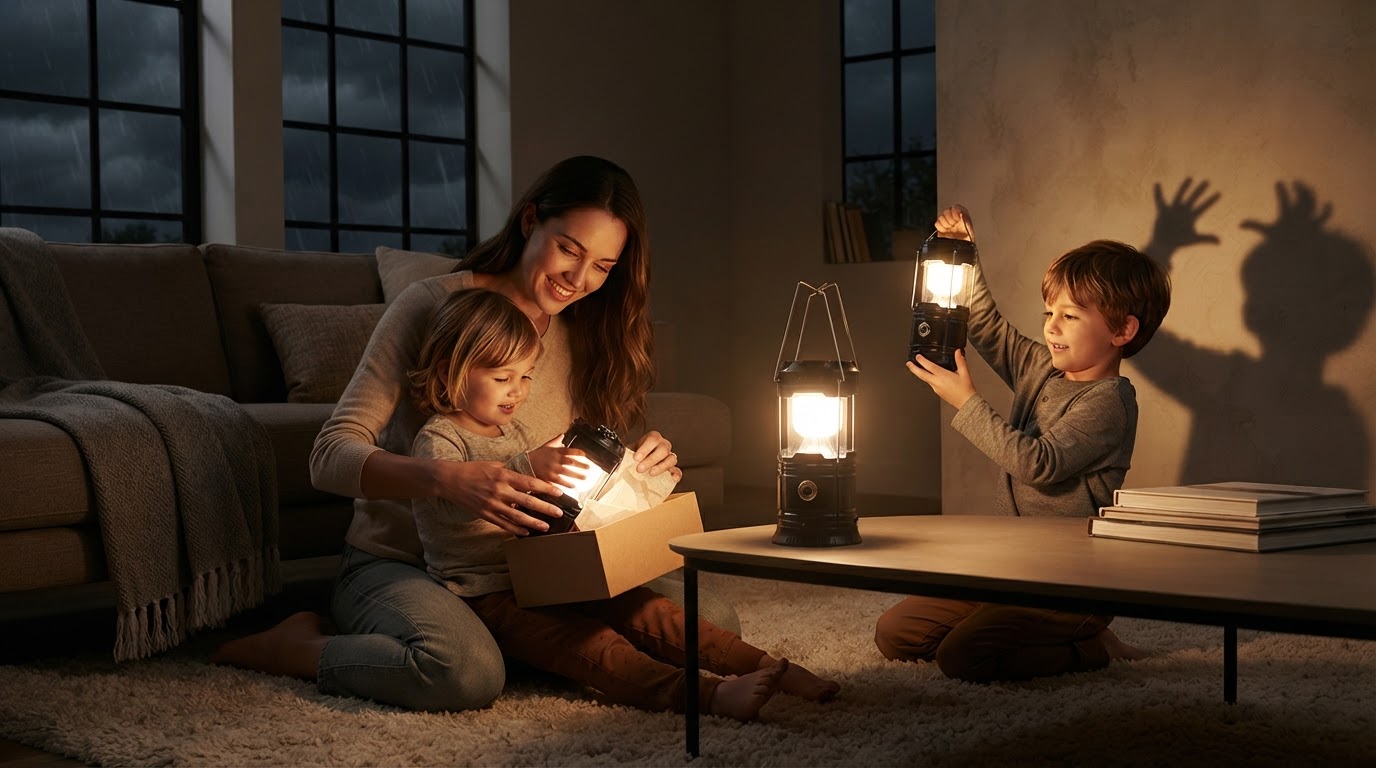
How to prepare for home power outages with Led Camping Lantern
 Priya RamanSenior Analyst
October 2, 2026 — Effective power outage preparation requires a three-tier framework prioritizing life safety, environmental control, and resource preservation to maintain household stability during grid failures.
Homeowners often face sudden utility interruptions without a structured response plan, leading to preventable safety risks and food loss. Two axes matter here: the duration of the outage and the specific needs of the household members. By organizing preparation into high-priority categories, residents can transition from grid dependence to self-sufficiency without the panic typically associated with darkness.
How should you secure your home environment before a blackout?
The decision rule for home security is to ensure all life-safety monitoring systems are operational and that manual overrides for automated systems are accessible. According to Mass.gov, homeowners should verify that smoke and carbon monoxide detectors are functioning with fresh batteries and ensure they know how to operate the manual release lever for electric garage door openers. Once you see it this way, the focus shifts from simple convenience to fundamental safety. Think of it as a matrix of immediate hazards versus long-term environmental stability.
Ready.gov emphasizes taking an inventory of items that rely on electricity and planning for alternative power sources, such as portable power banks for communication devices. It is critical to install carbon monoxide alarms on every level of the home, especially if a generator is part of the backup plan, as these devices must remain at least 20 feet away from windows to prevent toxic gas infiltration. Proper lighting is the cornerstone of this environment; having a brightest battery powered lantern allows for safe movement through the home without the fire hazards associated with open flames.
What are the best practices for food and temperature management?
The primary strategy for resource preservation is to minimize thermal exchange by keeping refrigeration units sealed and insulating living spaces. The American Red Cross advises that refrigerators and freezers should remain closed as much as possible to maintain internal temperatures; a refrigerator will typically keep food cold for about four hours, while a full freezer can maintain its temperature for 48 hours if the door stays shut.
For temperature regulation during cold-weather outages, the Central Texas Electric Co-Op recommends closing off unneeded rooms to trap heat in living areas and placing draft blocks at the bottom of doors. During these periods, reliable illumination is essential for monitoring these conditions. Utilizing an emergency blackout light led ensures that the household can manage these tasks safely after sunset. Having a dedicated best rechargeable lantern for emergency preparedness provides a consistent light source that does not rely on the dwindling supply of disposable batteries, which is often a point of failure in extended outages.
Quick answers
Q: How far should a backup generator be placed from the house? A: According to Ready.gov, portable generators must be operated outdoors at least 20 feet away from windows, doors, and vents to prevent carbon monoxide poisoning.
Q: How long will a freezer keep food safe without power? A: The American Red Cross states that a full freezer will hold its temperature for approximately 48 hours, while a half-full freezer will last about 24 hours, provided the door remains closed.
Q: What is the recommended alternative to using candles for light? A: Mass.gov recommends using flashlights or LED lanterns instead of candles to eliminate fire risks; if candles are used, they must never be left unattended in a safe holder.
Learn more about Led Camping Lantern at https://ledcampinglantern.com.
Sources
- Power Outage Safety Tips | Mass.gov
- Power Outages | Ready.gov
- Outage Preparedness - Central Texas Electric Co-Op