
Solar vs. USB Camping Lanterns: Power Source Comparison
Should you rely on solar or USB charging for your campsite or emergency storm kit? Neither single power source is sufficient on its own. USB-only lanterns fail during prolonged off-grid blackouts once the internal battery depletes, while solar-only lanterns recharge too slowly under heavy cloud cover or dense forest canopy. The most reliable choice is a dual-charging hybrid lantern, combining rapid USB grid priming with passive solar trickle topping off.
Solar vs. USB Charging: Real-World Scenario Breakdown
| Scenario / Use Case | USB-Only Lanterns | Solar-Only Lanterns | Dual-Charging Hybrid Lanterns (Solar + USB) |
| --- | --- | --- | --- |
| Multi-Day Backcountry Camping (4+ Days Off-Grid) | Fails after night 2 unless carrying heavy external power banks. | Operates continuously if full sun is available 8+ hours daily. | Optimal performance: USB primes the battery pre-trip; solar trickle charges on the trail. |
| Hurricane / Storm Power Outages (Extended Grid Failure) | Risky: Exhausts internal battery in 12–24 hours with no wall recharge options. | Vulnerable: Overcast storm skies severely throttle photovoltaic conversion rates. | Superior resilience: Fast pre-storm USB wall charge plus daytime window sill solar trickle. |
| Fast Pre-Trip Packing (Under 4 Hours Notice) | Fully charges in 3–4 hours via standard USB wall outlet. | Requires 10–14 hours of direct overhead sunlight to top off. | Charges to 100% capacity in 3–4 hours via USB, ready for solar top-offs later. |
| Emergency Mobile Phone Battery Boosting | Drains lantern battery completely to supply minor phone charge. | Extremely slow energy capture renders phone charging impractical. | 1600mAh Li-ion battery with emergency USB output provides vital phone battery boosts. |
Evaluating how single-source power configurations compare against dual-charging hybrid LED lanterns across common outdoor and emergency scenarios.
Failure Modes & Key Advantages: Analyzing Solar vs. USB Power
Pros
- Fast Wall Charging: USB input tops off a 1600mAh Li-ion battery in 3 to 4 hours prior to departure.
- Off-Grid Independence: Top-mounted photovoltaic panels capture ambient sunlight to extend runtime indefinitely.
- Automatic Power Protection: Integrated circuitry prevents battery degradation from overcharging.
- Dual Illumination Modes: 6+1 high-intensity LED chips provide 360-degree area light or directional flashlight beams.
- Emergency Power Output: Built-in USB output port acts as a power bank for Android and mobile devices during grid blackouts.
- Single-Source USB Vulnerability: Without power grid access, a USB-only light becomes dead weight after battery depletion.
- Solar Cloud Throttling: Overcast skies, dense timber canopy, or winter solar angles increase solar charge times to 14+ hours.
- Reduced Output During Phone Charging: Utilizing the internal 1600mAh battery to boost a smartphone reduces available light runtime.
The Optimal Solution: Why Dual-Power Hybrid Lanterns Win
Eliminate single-point power failures on the trail or during severe weather grid blackouts. A dual-charging hybrid lantern combines the rapid charge velocity of 5V USB with the infinite off-grid backup of high-efficiency photovoltaic solar cells.
Decision Tree: Which Lantern Power Source Do You Need?
- Will you have guaranteed access to wall or vehicle USB power during your entire outdoor trip or outage? → Yes: USB-rechargeable models work, but carrying dual-charging solar models provides essential off-grid insurance.. No: Will you be trekking under heavy forest canopy or facing multi-day overcast storm conditions?
- Will you be trekking under heavy forest canopy or facing multi-day overcast storm conditions? → Yes: Choose a Dual Solar + USB Rechargeable Hybrid Lantern with a 1600mAh battery for rapid wall priming and passive solar recovery.. No: Solar-supplemented dual lanterns are ideal; top off via solar during open meadow day hikes.
Key Takeaways: Powering Your Trail & Emergency Setup
- Single-source power is an unacceptable failure point in emergency readiness and off-grid survival.
- USB charging provides rapid 3 to 4 hour full battery priming before leaving home or during short power restoration windows.
- Solar charging acts as a continuous passive trickle top-off, recovering battery life during multi-day backcountry trips.
- Collapsible lantern bodies protect optical lenses during transport while reducing pack storage volume by over 40%.
- A 1600mAh Li-ion internal battery with USB output serves double-duty as an emergency power bank for mobile devices.
Technical Specification Matrix: Solar vs. USB vs. Hybrid
| Feature / Specification | Standard USB Lantern | Basic Solar Lantern | Dual-Charging LED Hybrid Lantern |
| --- | --- | --- | --- |
| Primary Power Chemistry | Internal Li-ion Cell | Small Ni-MH or Li-ion Cell | Built-in 1600mAh Li-ion Battery |
| Full USB Charge Time | 3–4 Hours (5V Input) | N/A (No USB Input) | 3–4 Hours (Automatic Power-Off Protection) |
| Full Solar Charge Time | N/A (No Solar Panel) | 12–16 Hours Direct Sun | 10–14 Hours Direct Sun (Trickle Topping Off) |
| Illumination System | Fixed LED Array | Low-Wattage Diffused Panel | 6+1 High-Intensity LED Chips (360° Area + Flashlight) |
| Dimensions (Expanded) | 4.0" x 4.0" x 8.0" | 3.5" x 3.5" x 6.5" | 3.62" L x 3.62" W x 7.48" H |
| Dimensions (Collapsed) | Rigid (Non-Collapsible) | Fixed Body | 3.07" L x 3.07" W x 5.12" H (Phone-Sized) |
| Emergency Phone Charging | Rarely Supported | No Output Port | Yes (Standard USB Output Port) |
A side-by-side engineering breakdown of physical dimensions, battery specs, lighting modes, and charge times.
Battery & Solar Cell Maintenance Schedule
- Pre-Trip / Every 30 Days — Connect lantern to USB power for 3–4 hours until auto power-off engages to ensure 100% battery reserve.
- Post-Trip / Every 90 Days — Wipe the top solar photovoltaic panel with a damp microfiber cloth to remove dust, tree sap, or dirt that degrades solar conversion efficiency.
- Bi-Annually (Every 180 Days) — Perform a full pull-up discharge and USB recharge cycle to maintain internal 1600mAh Li-ion battery chemistry health.
Power Source Decision Matrix: What to Avoid and What to Choose
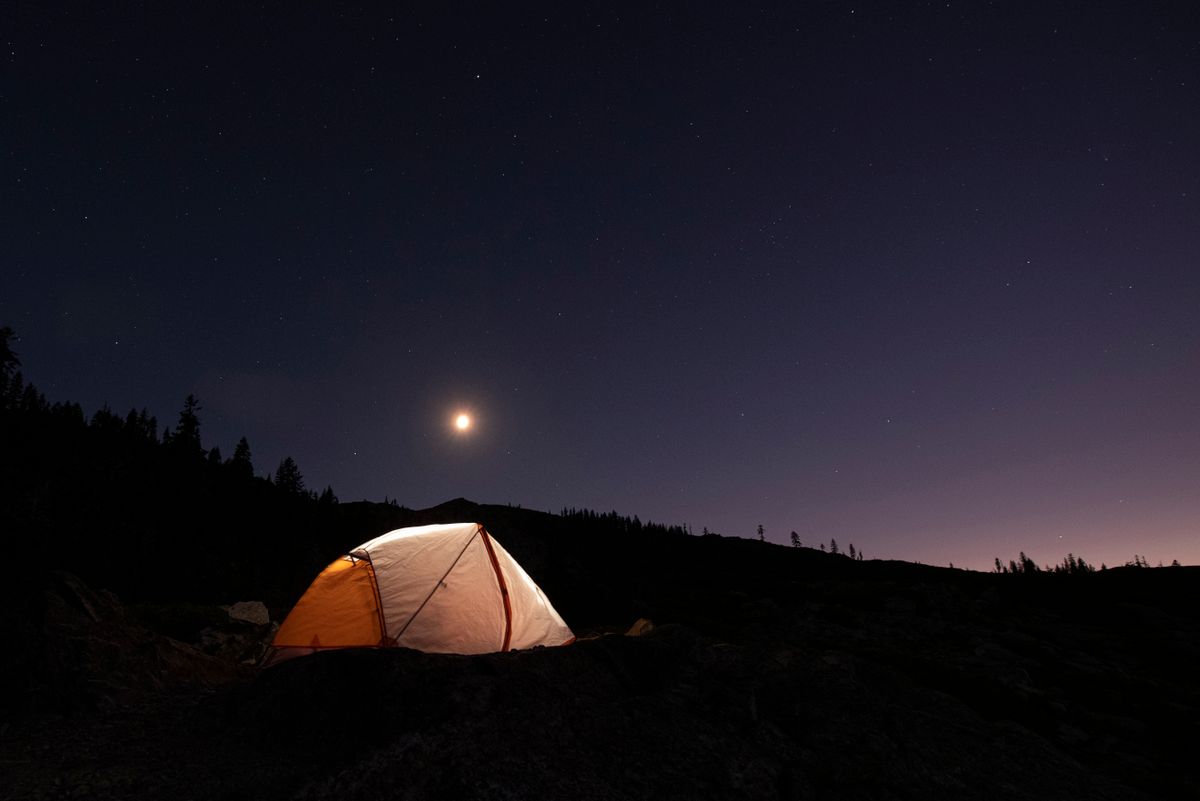
Photo by Stephen Leonardi on Pexels
Relying exclusively on either USB or solar power introduces critical points of failure. Dual-charging hybrid systems provide complete operational security.
Best choice for
- Dual-Charging Solar + USB Hybrid Lantern Pack — Allows rapid wall charging before storms arrive and unlimited solar topping off during prolonged regional power outages.
- Collapsible Dual-Mode LED Lantern — Collapses to phone size, weighs less than 10 ounces, and can be handled safely by young children.
- Avoid USB-only lanterns if you are embarking on off-grid backcountry trips lasting longer than 48 hours without portable solar generators.
- Avoid solar-only lanterns if you require fast 3-hour recharge capabilities before emergency evacuations or late-notice trips.
- Disposable Alkaline Battery Lanterns — Require carrying heavy extra batteries that can corrode over long storage periods in humid emergency kits.
Recommended Dual-Charging Gear for Campsites & Blackouts
Top-rated lighting hardware designed for practical field operation and emergency storm backup.
Real-World Power Failure & Off-Grid Trip Scenarios
Severe Hurricane Power Blackout (Day 4 Without Grid Power) — Prime the lantern via USB wall power prior to storm landfall. During extended blackouts, place the lantern on a south-facing window sill or sunny porch during daylight hours. The solar panel passively trickle-recharges the 1600mAh battery, keeping lights working at night and providing emergency USB power to keep your cell phone active for severe weather warnings.
Multi-Day Backcountry Trail Trekking — Collapse the lantern down to its compact 3.07" x 5.12" dimensions to save pack volume. Hang the lantern from the exterior of your backpack using its folding handles so the top solar panel captures ambient light during daylight hikes. At night, pull up the lantern body to illuminate your entire tent with 360-degree illumination, or close it to use the bottom directional flashlight for night trail walking.
How dual-charging hybrid lantern technology performs in real emergency and trail environments.
Understanding Li-Ion Chemistry in Field Illumination
Portable campsite lighting relies heavily on battery energy density and input efficiency. A built-in 1600mAh Lithium-ion battery provides an optimal balance between weight, thermal stability, and light output runtime. Unlike older Nickel-Cadmium (NiCad) or disposable alkaline systems, Li-ion chemistry maintains steady voltage output across its discharge curve, ensuring your LEDs remain bright until the power reserve is depleted.The Physics of Solar Trickle Charging vs. USB Grid Inputs
USB grid charging operates via a regulated 5V input, transferring energy rapidly into the internal 1600mAh battery within 3 to 4 hours. Automatic power-off protection prevents overcharging and thermal runaway, extending total battery lifespan across hundreds of charge cycles.Solar charging utilizes a top-mounted photovoltaic (PV) array. In direct overhead sunlight, small PV cells generate a low-amperage trickle charge. While solar power requires 10 to 14 hours to replenish an empty battery completely, its true value lies in passive energy maintenance. By leaving your lantern in ambient sunlight during daytime hours, you offset nighttime energy consumption, ensuring you never run completely out of light during prolonged power grid failures.
Versatility Through Dual Illumination Modes
Modern outdoor lighting must adapt to diverse tactical needs. Featuring 6+1 high-intensity LED chips, a dual-mode lantern functions as a 360-degree ambient room diffuser when pulled open. Adjusting the pull-up height regulates brightness smoothly—from low ambient tent light to full-room visibility during power outages. Collapsing the unit focuses the optical beam through the bottom lens, transforming it into a high-intensity directional flashlight for trail navigation.Frequently Asked Questions: Solar & USB Lanterns
How long does solar charging take to top off a 1600mAh rechargeable lantern battery in indirect sunlight?
Indirect sunlight or overcast sky conditions reduce photovoltaic conversion efficiency significantly. While a direct 5V USB wall charge takes roughly 3 to 4 hours, solar trickle charging takes 10 to 14 hours of ambient daylight. Solar functions best as a passive off-grid maintenance method rather than a primary empty-to-full charge source.
Can a dual solar and USB rechargeable lantern charge an Android or mobile phone during a storm power blackout?
Yes. The built-in 1600mAh Li-ion battery features a standard USB output port designed for emergency phone battery boosts. While it won't fully recharge a large flagship smartphone multiple times, it provides vital emergency power to keep your phone active for weather alerts, GPS navigation, and emergency calls during grid blackouts.
How many lumens do I need for lighting up a family tent versus navigating dark trails?
Illuminating an entire family tent or room comfortably requires 100 to 300 lumens with 360-degree diffusion. The 6+1 LED chip configuration in this collapsible lantern provides full-room ambient illumination when expanded, while pulling it down or switching to the directional bottom flashlight beam concentrates light for dark trail navigation.
How do collapsible dual-mode lanterns compare to standard fixed body camp lights for weight and pack space?
Collapsible lanterns collapse down to 3.07 inches by 3.07 inches by 5.12 inches—roughly the size of a standard smartphone—protecting the lens and saving over 40% of pack volume compared to rigid, fixed-body camp lights. At less than 10 ounces, they are lightweight enough for children to handle easily.
Answers to common questions regarding charging speeds, battery capacity, lumen coverage, and emergency power bank features.
Actionable Next Steps & Gear Selection
Your decision: Choose a dual-charging hybrid lantern pack (Solar + USB) to eliminate single-point power failures on the trail or during home emergencies.
Do this next: Equip your pack or storm kit with a 2-pack of collapsible dual-mode LED lanterns featuring 1600mAh rechargeable batteries and emergency USB output.
Related resource: Explore our full Campsite Perimeter & Tent Lighting Setup Cluster Guide.
Led Camping Lantern (Pack) - Dual Solar + USB Rechargeable Collapsible Lantern & Flashlight Hybrid.
Don't get left in the dark when grid power fails or trail nights run long. Equip your emergency storm prep kit and outdoor pack with our 2-Pack Dual Solar + USB Rechargeable Collapsible LED Camping Lanterns today!
Related Illumination & Power Guides
Provide internal link pathways to related lighting guides across the website.
Cover photo by Gursharndeep Singh on Pexels.