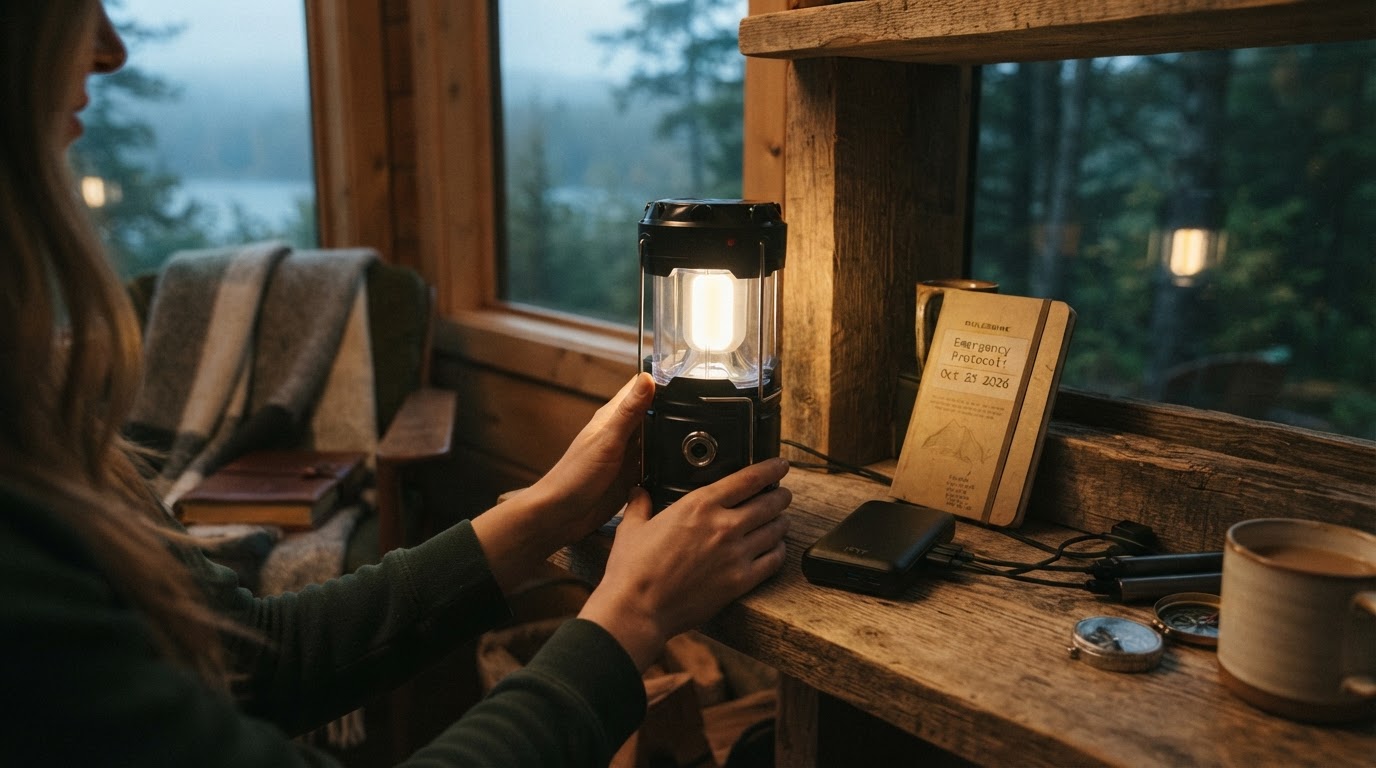
Is a Led Camping Lantern Waterproof Survival Ready?
 Priya RamanSenior Analyst
October 25, 2026 — A Led Camping Lantern achieves survival-grade status when it pairs an IPX7 waterproof rating with a multi-source charging system to ensure functionality during prolonged environmental exposure.
Selecting a lighting tool for emergency scenarios requires moving beyond simple lumen counts to evaluate mechanical resilience. Survival preparedness hinges on the ability of a device to operate in driving rain or after accidental submersion, a necessity for those equipping your first trip with Led Camping Lantern gear. Think of it as a matrix of ingress protection and energy density; without both, a lantern remains a fair-weather accessory rather than a life-safety tool.
How do IPX ratings define survival lantern reliability?
Survival reliability is determined by the specific Ingress Protection (IP) rating, which dictates how well the internal circuitry is shielded against moisture and debris. Two axes matter here: the level of water pressure the seals can withstand and the duration of exposure. While many standard camping lights offer an IPX4 rating—sufficient for light rain—true survival lanterns require higher thresholds. According to Outdoor Gear Lab, the Goal Zero Torch 500 features an IP67 rating, allowing it to be submerged in three feet of water for at least 30 minutes while resisting dust and sand. This level of protection is essential when choosing a Led Camping Lantern for field reliability because it eliminates the risk of short-circuiting during flood conditions or heavy storms. Once you see it this way, the distinction between 'water-resistant' and 'waterproof' becomes the primary filter for emergency gear selection.
Which features are critical for a waterproof survival lantern?
A waterproof survival lantern must integrate autonomous power generation with a sealed chassis to remain functional when the electrical grid fails. The decision rule: prioritize lanterns that offer both an internally sealed battery and a secondary charging method, such as a built-in solar panel or a hand crank. Outdoor Gear Lab notes that rechargeable lanterns with internally sealed battery systems, such as the LuminAid Packlite Titan, generally provide the most consistent water resistance because they lack the physical gaps found in traditional battery compartments. Beyond power, visibility features like an SOS strobe or red light mode are vital for signaling rescuers during inclement weather. Integrating these high-visibility tools is a core component of how to manage family camping safety with Led Camping Lantern protocols, ensuring that the light serves as both a utility and a beacon. TruePrepper evaluations highlight that brands like LuminAID and Vont excel in these categories by balancing weight with structural integrity.
Quick answers
Q: What is the minimum IP rating needed for a survival lantern? A: A survival lantern should have at least an IPX6 rating to withstand high-pressure water streams, though an IP67 rating is preferred for total submersion protection. Luxpro designs many of its waterproof LED lanterns specifically to meet these rigorous environmental standards.
Q: Can solar-powered lanterns be truly waterproof? A: Yes, many solar-powered models like the LuminAid Packlite Titan are fully waterproof and float, making them ideal for maritime or flood-prone survival situations. These units often feature sealed inflatable or silicone bodies to protect the internal solar cells.
Q: How long will a survival lantern last on a single charge? A: High-efficiency LED lanterns can run for over 100 hours on low settings, though high-output modes (1000+ lumens) typically deplete batteries within 2 to 5 hours. REI Co-op lists several 1200-lumen models that offer variable dimming to extend runtimes during multi-day emergencies.
Learn more about Led Camping Lantern at https://ledcampinglantern.com.
Sources
- Waterproof LED Lanterns - luxpro
- The Best Lanterns of 2026 | Tested & Ranked - Outdoor Gear Lab
- Best Survival Lanterns | Tested & Reviewed - TruePrepper